

Stereopticon
SEEING THE WORLD IN A WHOLE NEW DIMENSION

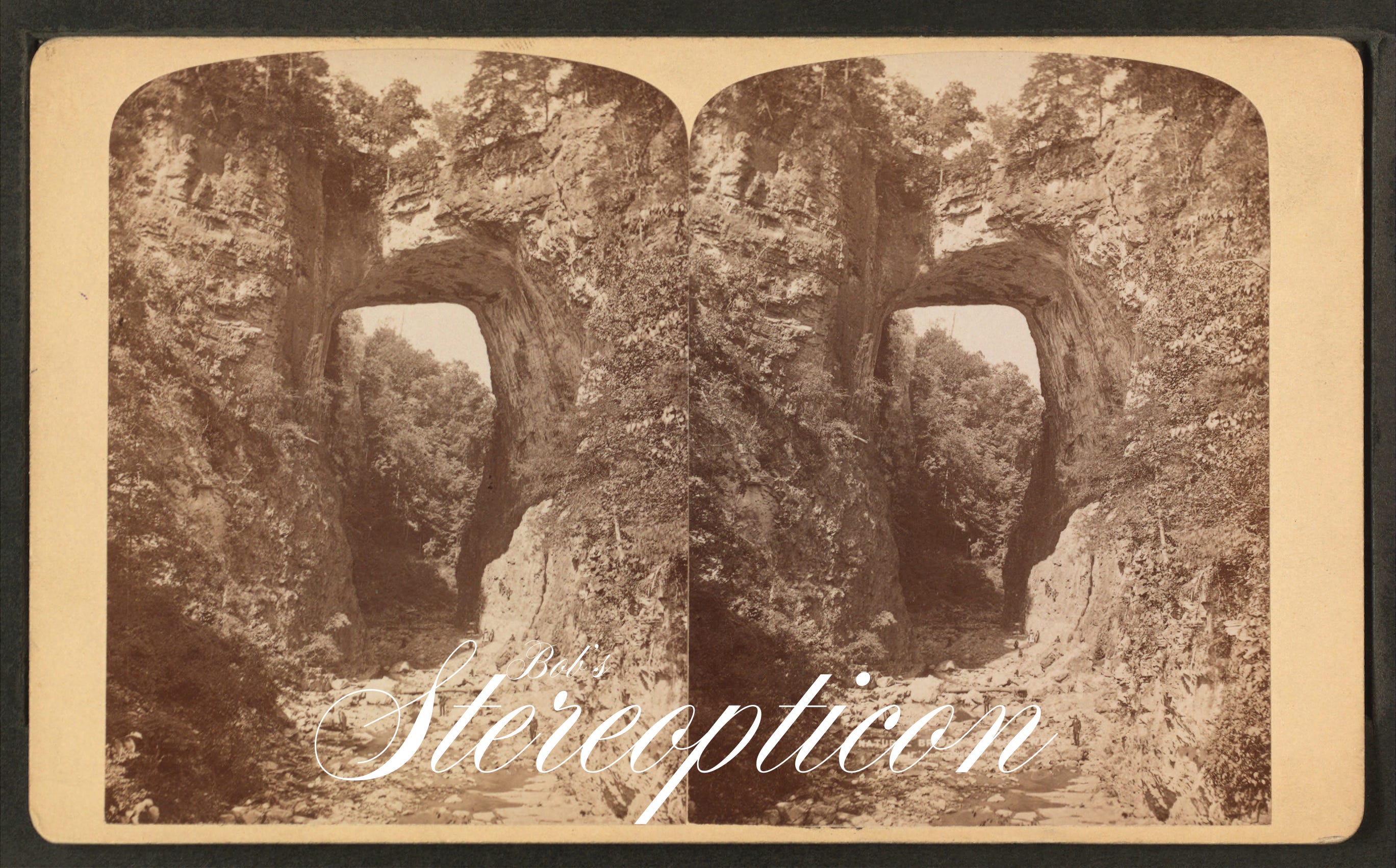
A Stereopticon Card created in the second half of the nineteenth century: Natural Bridge, looking west, — by C. H. James
Early in the nineteenth century, researchers were fascinated with how the human eye worked. In 1939, Charles Wheatstone created the first Stereopticon (or Stereoscope) in London, England. The device, coupled with the invention of photography, opened up a whole new way of seeing the world. It was a time when railroads and steamships were making the remote places of the world more accessible. Artists like Frederic Edwin Church were creating huge canvasses of faraway places and throngs of people lined up to see them when they were put on public display.
Still, in the nineteenth century, travel itself was an expensive luxury – or a desperate leap for the poor and oppressed seeking a new life in a new land. The former traveled in grand first-class cabins, the latter in steerage. But for all, there was a great big world out there. Church’s paintings, after public display, would often end up in mansions. The stereopticon allowed ordinary people a unique chance to see the world.
The device and the photographic cards for it were not cheap, but they were within reach, and in the second half of the nineteenth century they brought the world into many people’s homes. They followed great explorers to remote corners of the world.
The device itself was relatively simple. Two images, each taken from a slightly different viewing point, were viewed through two lenses in the machine. The images, seen overlapping each other, gave the viewer the effect of seeing the scene in three dimensions. Packs of cards could be purchased that opened up a world of adventure. There were also humorous ones. But mostly, they evoked wonder.
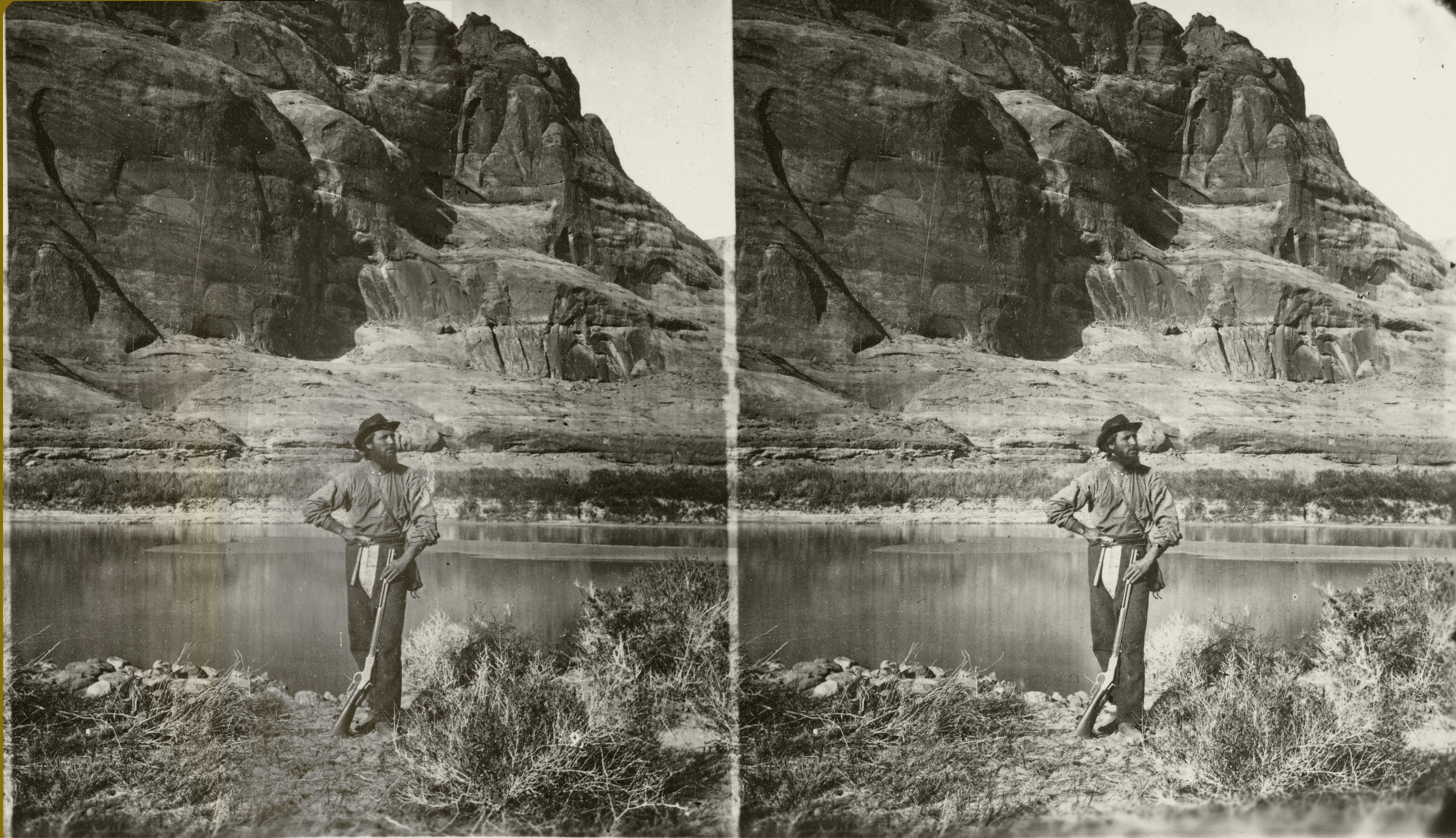
John F. Steward of John Wesley Powell's party in Glen Canyon. Utah or Arizona. (1872) Photo by E.O. Beaman USGS Public Domain
It seemed that the Stereopticon was a fitting metaphor for the writing I do. It follows my interests – nature, art, history, photography, and lessons learned in my youth – especially from mom and dad. That is why the subtle renaming from Bob’s Substack to Bob’s Stereopticon. Would you join me as a new year beckons us to explore our world with new vision? (Cyclopes need not apply).
My Writing for American Essence Magazine
[click to read]
Here you will find several years of articles I have contributed to this fine publication.
Snowy Day at the Natural Bridge
[click to read]

Mohomony. — Painting by Bob Kirchman
The Monacan Story
[click to read]
It reads like the story of the Battle of Thermopylae. (read more)
Stereopticon Images of Natural Bridge
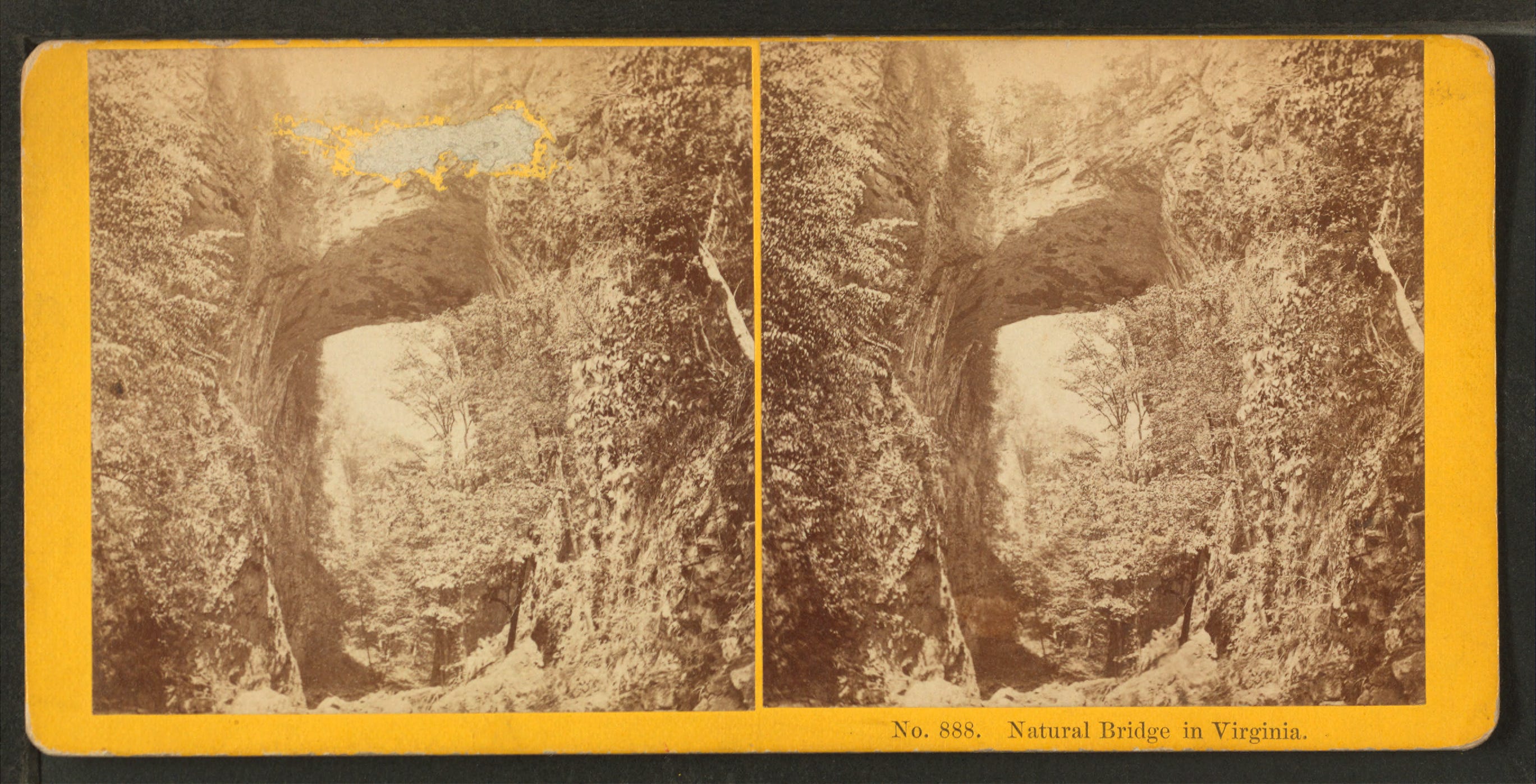
Natural Bridge in Virginia, — by Kilburn Brothers, Public Domain
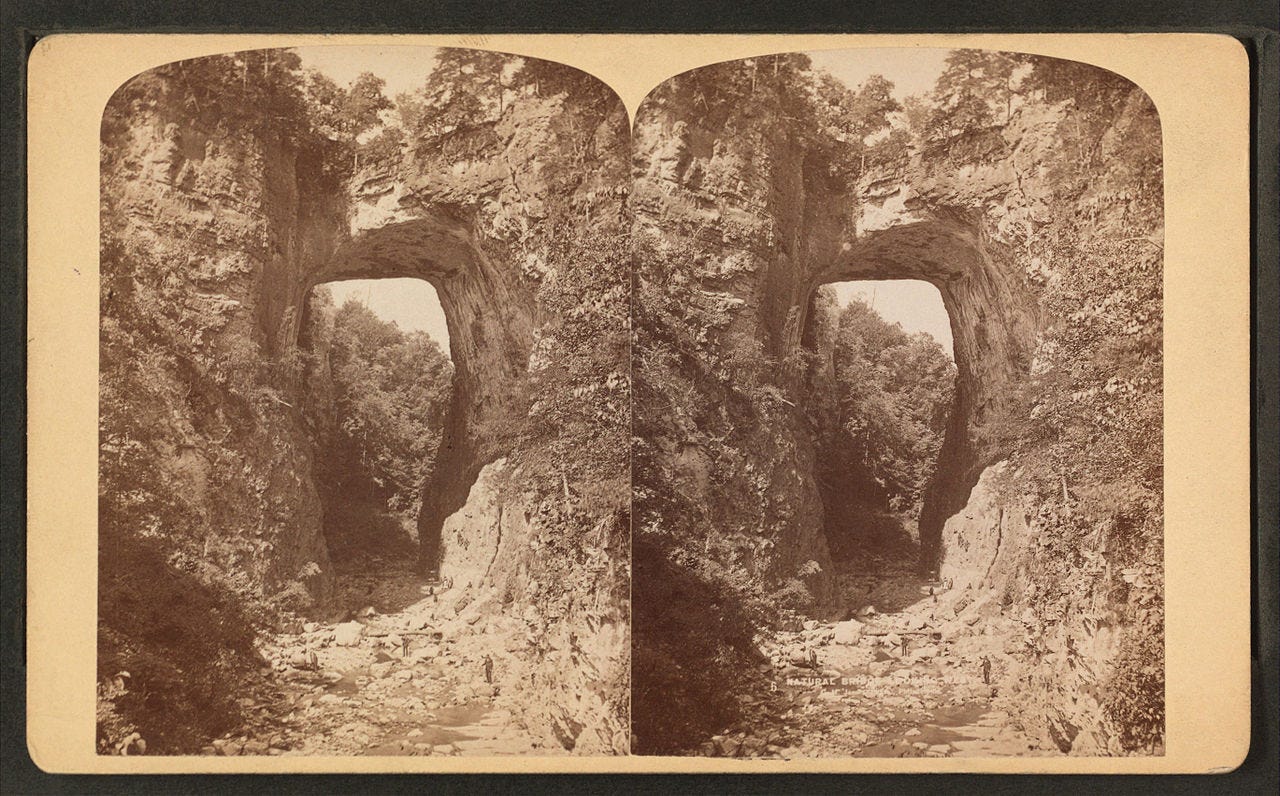
Image by C. H. James — Public Domain
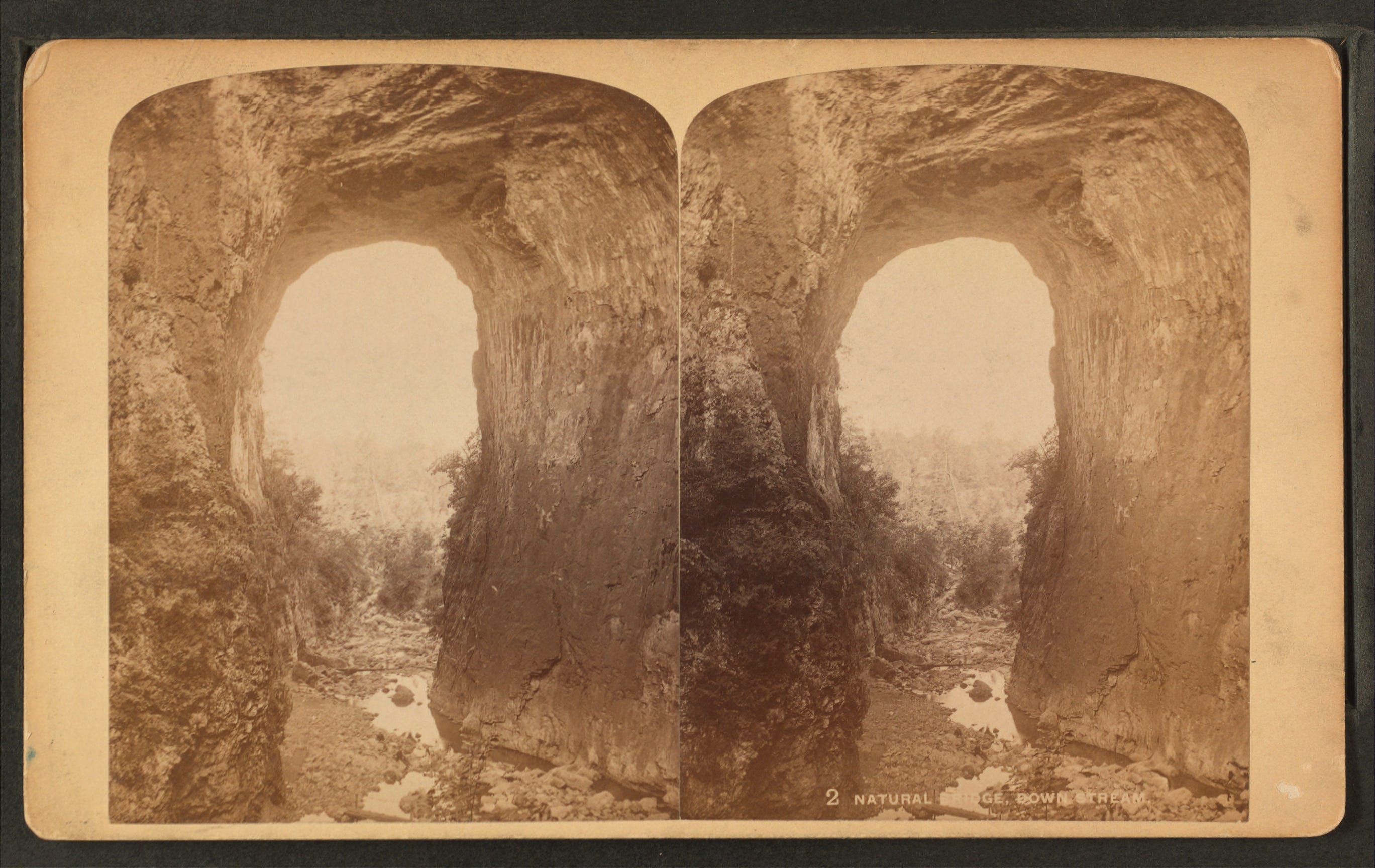
Image by C. H. James — Public Domain
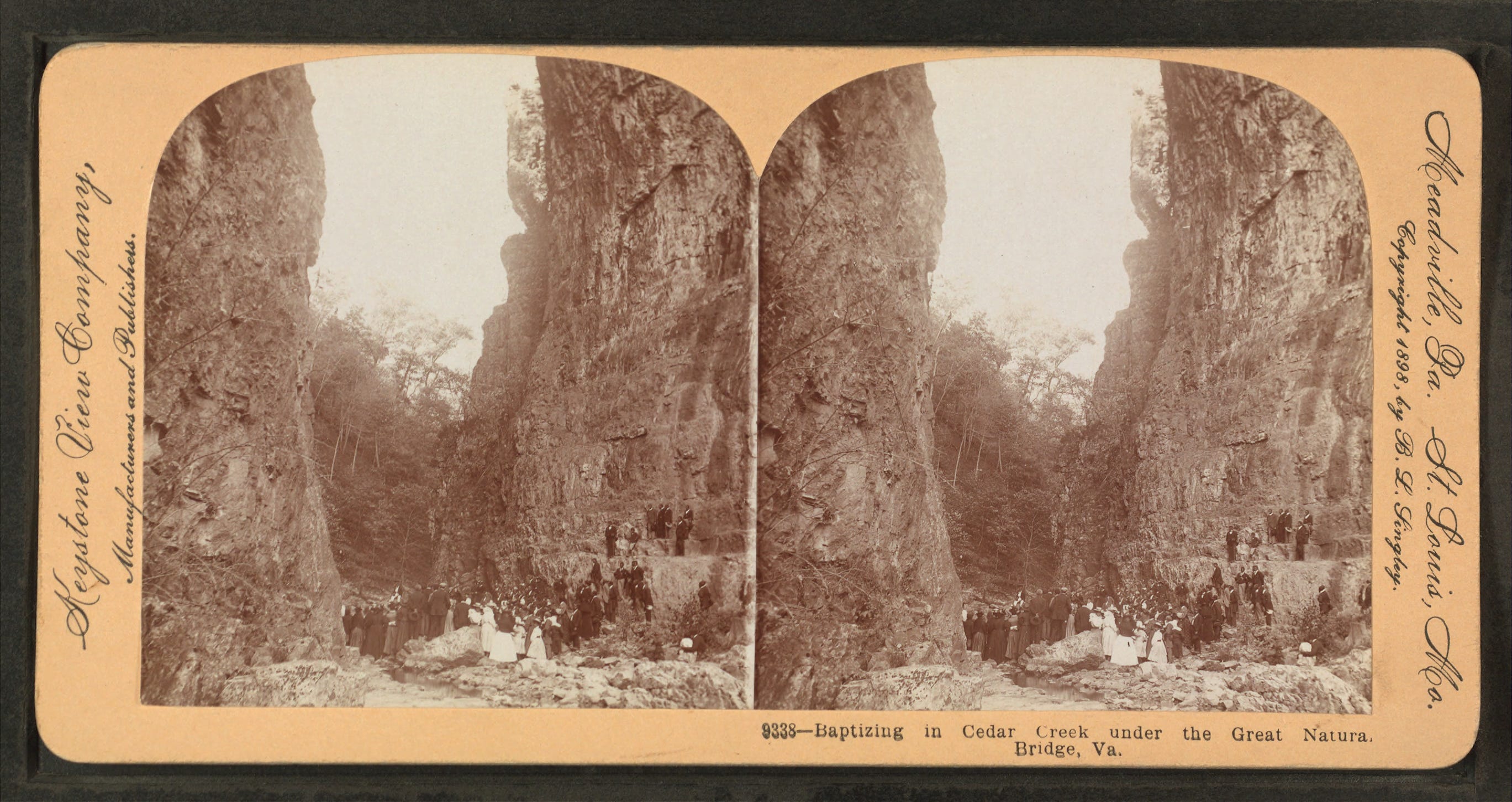
Baptizing in Cedar Creek under Natural Bridge — B. L. Singley, Public Domain
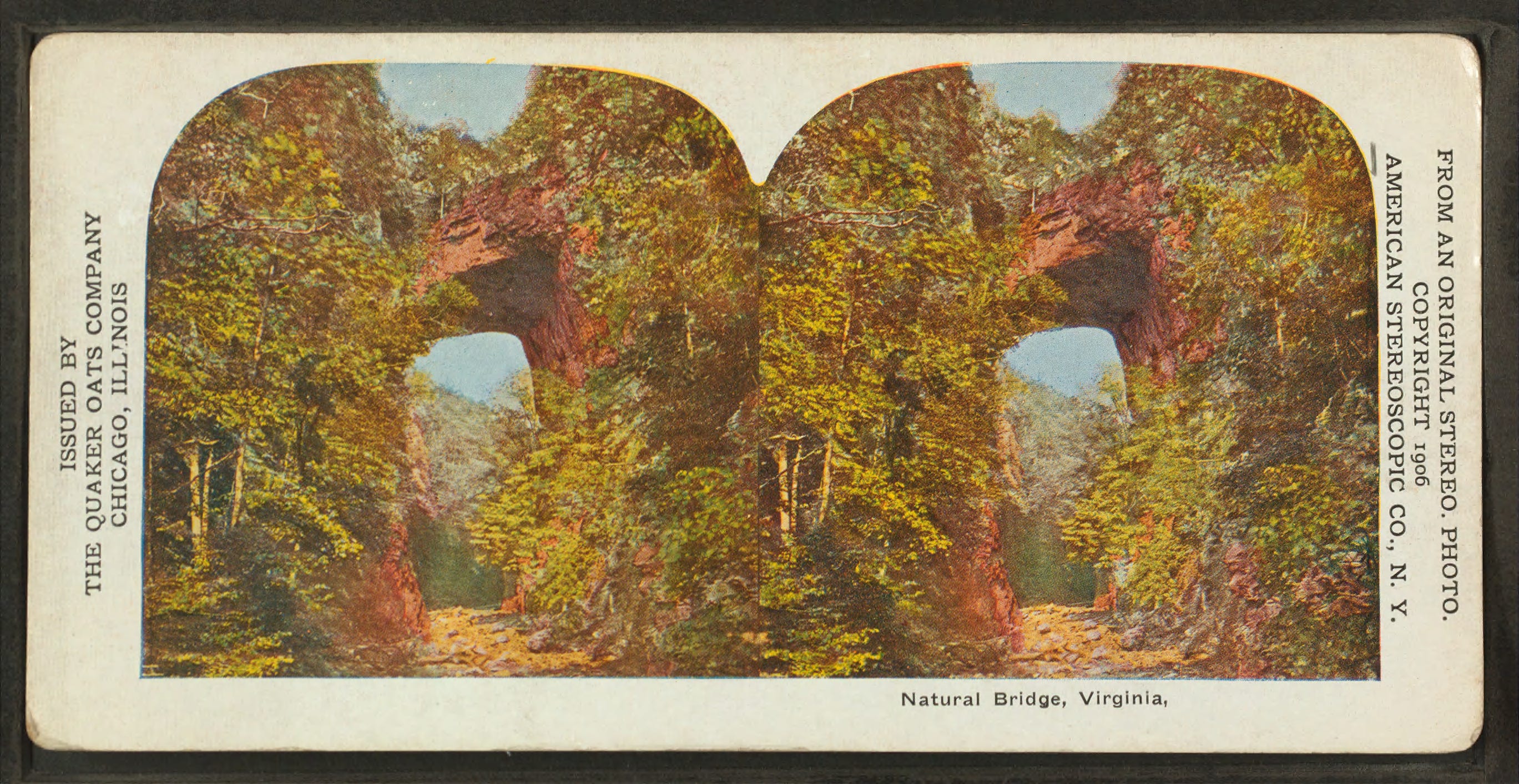
Colourized Version from 1906 — American Stereoptic Company